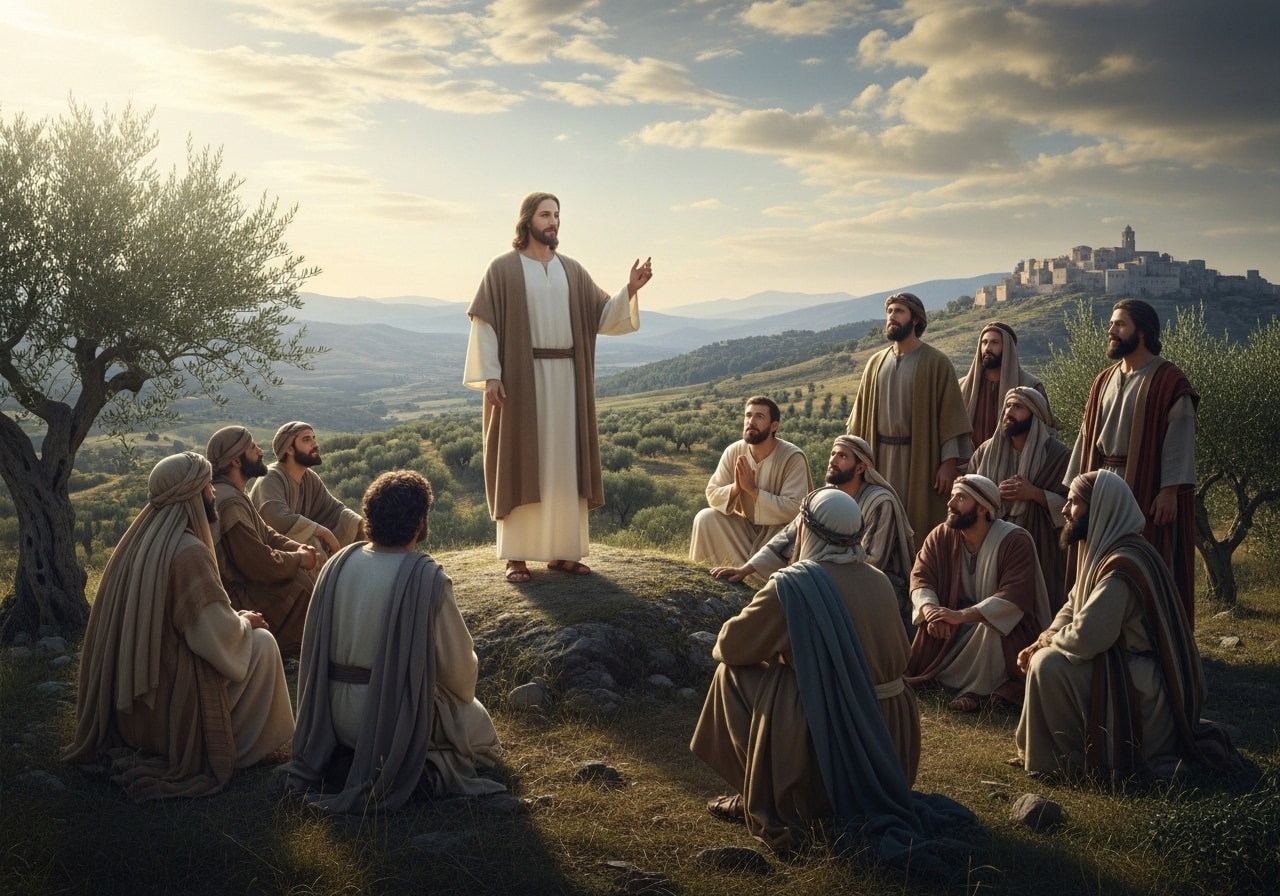
Unlocking a Key Biblical Distinction
For many new students of the Bible, a common point of confusion arises when comparing the ministry of Jesus in the Gospels with the ministry of the Apostle Paul in his letters. The messages can seem different, and the requirements appear to vary, leading to questions about consistency and application. This feeling is perfectly normal, and you have come to the right place to find clarity.
The purpose of this primer is to clearly explain the two distinct ministries and gospel messages presented in the New Testament: the "gospel of the kingdom" preached by Jesus and the Twelve, and the "gospel of the grace" preached by Paul.
Grasping this key distinction is not a minor point of theology; it is fundamental to understanding the progressive nature of God's plan. By seeing how each ministry fits into its specific context, you will find that many seeming contradictions resolve themselves, bringing incredible clarity and joy to your Bible study. Let us begin by examining the first of these two great ministries.
The Gospel of the Kingdom: Jesus' Ministry to Israel
The earthly ministry of Jesus Christ and his Twelve disciples was focused, targeted, and specific. To understand their message, we must first understand their audience.
Audience: The Nation of Israel
The ministry of Jesus and the Twelve was directed exclusively to the nation of Israel. When Jesus sent his disciples out to preach, his instruction was unmistakable:
Go nowhere among the Gentiles and enter no town of the Samaritans, but go rather to the lost sheep of the house of Israel.
Matthew 10:5-6
This was a prophetic, covenant program directed at the people with whom God had made specific Old Testament promises.
The Message: Who Jesus Was
This ministry centered on proclaiming the "gospel of the kingdom." This good news was a call for national repentance so that the prophesied earthly kingdom could be established. The core components were:
- Focus on Identity: The message was fundamentally about believing who Jesus was—the long-awaited Messiah and the Son of God. The climax of this confession is found in Matthew 16:15-17, where Peter declares, "You are the Christ, the Son of the living God."
- Call to Repentance: It was a summons for the entire nation of Israel to repent and accept their King. Had the nation done so, the kingdom would have come.
- Requirement of Works: This gospel required works to accompany faith. These were not works to earn salvation, but acts of faith and obedience required by God at that time. They included:
- Water baptism for the forgiveness of sins (Mark 1:4, Acts 2:38)
- Keeping the Mosaic Law
- Forgiving others
The Promised Outcome: An Earthly Kingdom
The goal of this ministry was the establishment of the physical, earthly Kingdom of God for Israel, as prophesied for centuries. This was not a spiritual or metaphorical kingdom, but a literal reign of the Messiah from the throne of David in Jerusalem. Had Israel accepted their King, this is the kingdom that would have been inaugurated. But Israel, as a nation, did not accept Him, which set the stage for a new apostle with a new and previously hidden message.
The Gospel of Grace: Paul's Ministry to the World
The Apostle Paul is a unique figure in Scripture, called and commissioned not by Jesus during His earthly ministry, but directly by the resurrected and ascended Christ. The gospel he preached was not something he learned from the other apostles; it was a "secret" or "mystery" that he received by direct revelation (Galatians 1:11-12).
Audience: The World (Jew & Gentile)
While Jesus's ministry was to Israel, Paul was commissioned as the "apostle of the Gentiles" (Romans 11:13). His ministry inaugurated a new program and created a new spiritual entity called the Church, the body of Christ, in which there is no distinction between Jew and Gentile.
The Message: What Jesus Did
Paul's ministry centered on the "gospel of the grace of God." This gospel is defined most clearly in 1 Corinthians 15:1-4: that Christ died for our sins, was buried, and rose from the dead. Its core components are distinct from the gospel of the kingdom:
- Focus on Christ's Work: The central truth to be believed is not just who Jesus was, but specifically what Jesus did. Salvation comes from trusting in His finished work on the cross and His victorious resurrection.
- Faith Alone ("Faith + 0"): This gospel is received by faith alone, apart from any works. Works like baptism or keeping the Law are not requirements for salvation in this age of grace. Paul's declaration on this matter is absolute.
- The "One Baptism": Paul placed little importance on water baptism for salvation (1 Corinthians 1:17). He taught that the essential, unifying baptism for the Church is the "one baptism" of the Holy Spirit (Ephesians 4:5), which occurs the moment a person believes. This spiritual baptism places the believer into the body of Christ.
The Promised Outcome: A Heavenly Position
The result of believing Paul's gospel is not entrance into an earthly kingdom, but a new identity as a member of the Church, the body of Christ. Believers in this age are citizens of heaven with a heavenly destiny (Philippians 3:20).
At a Glance: Comparing the Two Gospels
To solidify our understanding, the chart below provides a direct comparison of these two distinct gospels as presented in Scripture.
| Feature | Gospel of the Kingdom (Jesus & The Twelve) | Gospel of Grace (Paul) |
|---|---|---|
| Primary Audience | Nation of Israel | The World (Gentiles and Jews) |
| Core Message Focus | Christ's Identity (Who He was) | Christ's Work (What He did) |
| Requirement for Salvation | Faith + Works (Repentance, Baptism, Law) | Faith Alone (Faith + 0) |
| Role of Water Baptism | Required for forgiveness of sins | Not required; a work of man |
| Governing Principle | The Mosaic Law | Grace |
| Promised Outcome / Destiny | An Earthly Kingdom | A Heavenly position in the Body of Christ |
This clear distinction naturally raises a crucial question: Why did God's program change so dramatically? The answer lies in a pivotal moment in biblical history.
The Turning Point: Why the Change?
The shift from the kingdom program to the grace program was not an accident, but a sovereign turn in God's plan precipitated by Israel's national decision.
The Cause: Israel's Rejection
The earthly kingdom prophesied in the Old Testament did not come because the nation of Israel, as a whole, rejected Jesus as their Messiah and King. This national rejection precipitated the postponement of the kingdom program. In His sovereign mercy, rather than bringing judgment, God inaugurated a new age of grace.
The Clarification: The Council of Jerusalem
The event that formally clarified and confirmed this new direction in God's plan was the Council of Jerusalem, described in Acts 15. This was a "Great Hinge" moment. The core conflict was intense: Jewish believers from Jerusalem were insisting that Paul's Gentile converts had to be circumcised and keep the Mosaic Law to be truly saved. They were, in effect, trying to place new Gentile believers under the requirements of the old gospel of the kingdom.
Peter's Declaration
After much debate, the Apostle Peter stood and made a stunning declaration. Siding with Paul, he reversed 2,000 years of protocol:
"But we believe that through the grace of the Lord Jesus Christ we shall be saved, even as they."
Acts 15:11
This was a watershed moment. Peter was not just agreeing with Paul; he was declaring that the original "Kingdom" path to salvation was now superseded. He stated that even the Jews—God's covenant people for centuries—must now come to God on the same terms as the Gentiles: through Paul's gospel of grace alone. The apostolic leadership in Jerusalem formally acknowledged the new revelation God had given to Paul.
One Gospel for Today
After the Council of Jerusalem, Paul's gospel of grace became the one and only message of salvation for this present age. The gospel of the kingdom was set aside, to be picked up again in the future for Israel. This is why Paul could write with such authority in Galatians 1:6-9 that anyone—even an angel from heaven—who preaches any other gospel for salvation is to be accursed.
Final Encouragement
Understanding the Bible is not about blending everything together, but about seeing the beautiful order in God's unfolding plan. He has different programs for different peoples at different times. The ministry to Israel under the Law and the ministry to the Church under grace are distinct, complementary, and perfectly designed. For believers today, this means that while the entire Bible is for us, Paul's epistles are written directly to us, containing the specific doctrine for the Church, given to him by our risen and glorified Lord Jesus Christ. Embracing this brings harmony to the Scriptures and a deeper appreciation for the matchless grace of God.
Join The Discussion
Disqus Comments Plugin will load here.